DRC Copper Prices Rise to US$14,705/Tonne While Cobalt Continues Upward Trend
Prices for key mineral exports from the Democratic Republic of Congo (DRC) continued to strengthen on international markets during the week of October 19 to 24, 2026, with both copper and cobalt recording gains amid sustained demand for energy-transition minerals.
According to the latest official mineral commodity price schedules, copper rose from US$14,425.60 per tonne to US$14,705.35 per tonne, while cobalt increased from US$38,507 per tonne to US$38,596 per tonne.
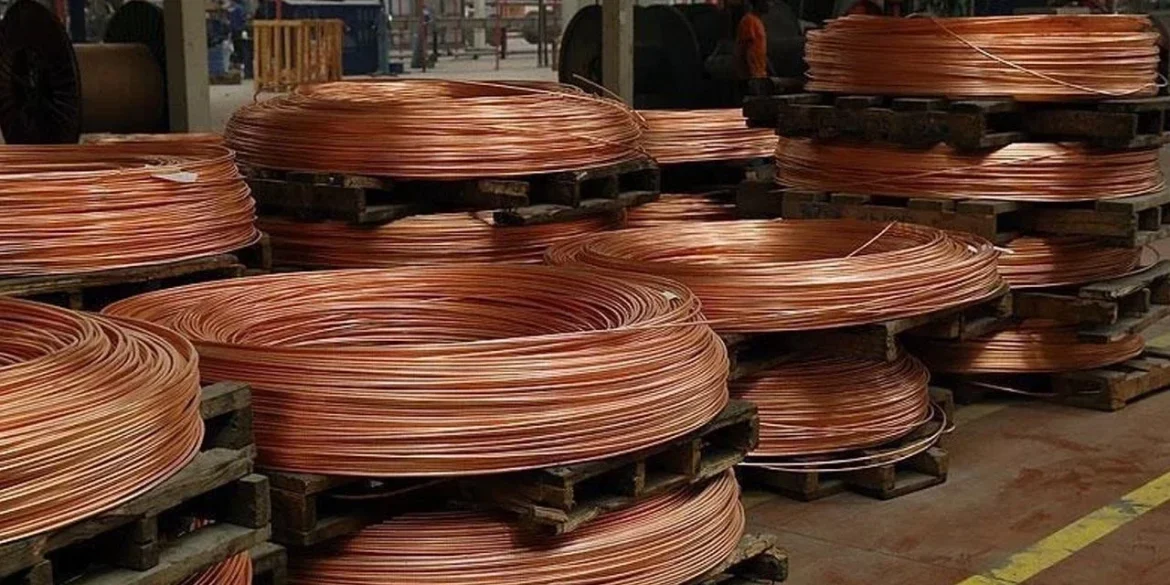
Copper recorded one of the strongest performances among the country’s leading mineral exports, gaining US$279.75 per tonne, representing an increase of approximately 1.94% over the previous pricing period.
The rise pushed the red metal above the US$14,700-per-tonne threshold, highlighting continued market strength for a commodity widely regarded as essential to global electrification efforts.
The upward movement comes as demand for copper remains supported by investments in renewable energy infrastructure, electric vehicles, data centres and power transmission networks, all of which rely heavily on the metal.
Cobalt, another strategic mineral for the energy transition, also posted a modest increase of US$89 per tonne, equivalent to a gain of around 0.23%.
The battery metal remains a critical component in the production of rechargeable batteries and advanced energy storage systems.
As the world’s largest producer of cobalt and the second-largest producer of copper in Africa, the DRC remains a key supplier of minerals that are increasingly vital to global industrial and clean-energy supply chains.
Beyond copper and cobalt, several other mineral commodities also registered gains during the review period.
Zinc prices edged higher from US$3,801.10 per tonne to US$3,810.70 per tonne, while germanium posted a more significant increase, climbing from US$13,150.38 per kilogram to US$13,662.43 per kilogram.
Germanium is widely used in fiber optics, semiconductor technologies and solar energy applications, making it an increasingly valuable strategic mineral.
However, the market performance was mixed, with a number of other commodities recording price declines.
Tin fell from US$54,345 per tonne to US$52,883.75 per tonne, while tantalum dropped from US$781 per kilogram to US$751 per kilogram.
Nickel also weakened during the period, declining from US$13,940.01 per tonne to US$13,649.39 per tonne.
Precious metals also experienced downward pressure. Gold slipped marginally from US$135.23 per gram to US$135.16 per gram, while silver declined from US$2.00 per gram to US$1.97 per gram.
Elsewhere, niobium concentrate fell from US$6,324.67 per tonne to US$6,120.67 per tonne, and aluminium ingots declined from US$1,471.55 per tonne to US$1,437.82 per tonne.
The latest price movements underscore the continued resilience of copper and cobalt markets at a time when governments, manufacturers and technology companies are competing to secure reliable supplies of critical minerals needed for the global energy transition.
For the DRC, sustained strength in these commodities remains particularly important given their significant contribution to export earnings, government revenues and foreign investment in the mining sector.